Diwali Snacking: What to Check Before Buying Packaged Foods and Sweets
Diwali Snacking: What to Check Before Buying Packaged Foods and Sweets
Before buying packaged Diwali snacks or sweets, check five things: the ingredient list, the serving size, the nutrition values (added sugar, saturated fat, trans fat and sodium), the date and storage instructions, and the FSSAI licence number. Compare similar products per 100 g, and do not rely on front-of-pack claims like “baked”, “natural” or “sugar-free”.
Diwali is about lights, family and, of course, food. Gift boxes of mithai, jars of namkeen, chocolates and biscuits fill our homes for weeks. With so many options, it is easy to pick a pack because it looks festive or sounds healthy. But the real information is on the back of the pack. A minute of label reading can help you compare products, avoid hidden extras and enjoy the celebrations with more awareness.
You do not need to give up your favourite treats. These simple checks help you choose better and eat mindfully.
- 1. Read the ingredient list first
Ingredients are listed in descending order by weight. The first few items make up most of the product.
- Refined flour (maida) and starch: common in biscuits, crackers and mixtures. Look for whole grains, pulses or nuts if you want more fibre.
- Sugar and its other names: glucose syrup, dextrose, maltose, fructose, invert syrup, jaggery syrup and honey are all sugars.
- Oils and fats: see which oil is used and whether the pack lists hydrogenated fat or shortening.
- Salt and sodium additives: namkeen and chips often contain salt plus flavour enhancers that add sodium.
- Long lists of additives: colours, preservatives and flavour enhancers are allowed within limits, but a short, simple ingredient list is usually easier to understand.
2. Check the serving size before comparing
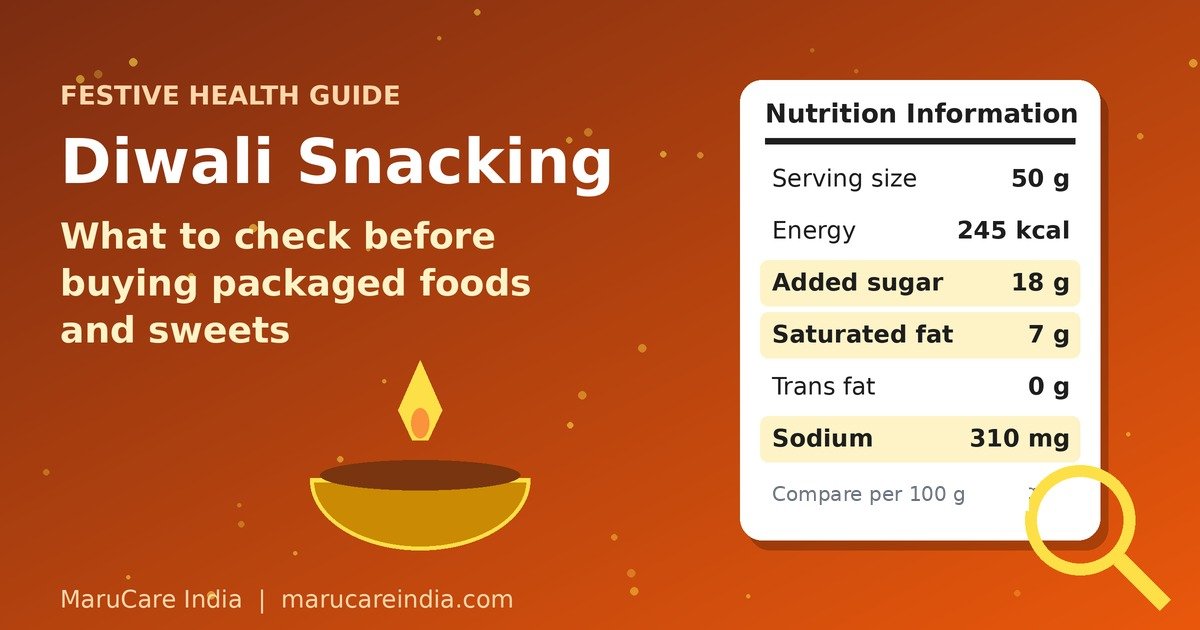
Nutrition values are often listed “per serving” and “per 100 g”. The serving size may be much smaller than what you actually eat.
For example, if a 200 g pack lists values for a 50 g serving, finishing the pack means four servings, so multiply the calories, sugar, fat and sodium by four. When comparing two products with different serving sizes, compare the per 100 g columns, then think about your real portion.
3. Know which nutrients to watch
- Added sugar: the sugar put in during processing. Mithai, biscuits, chocolates and cakes can be high.
- Saturated fat: found in ghee, butter, palm oil and coconut oil. Frequent high intake can affect cholesterol.
- Trans fat: the least desirable fat. Keep it as low as possible. Look for partially hydrogenated oil in the ingredients.
- Sodium: the part of salt that matters for blood pressure. Check it in namkeen, chips, salted nuts and savoury mixtures.
- Protein and fibre: useful positives. They help you feel full for longer.
- Total carbohydrates: important for people with diabetes, because starches, not only sugar, raise blood glucose.
Two packets of bhujia or mixture can look identical but differ a lot in sodium and fat. The label is the only way to tell.
4. Watch out for hydrogenated oils and shortening
Partially hydrogenated vegetable oil, hydrogenated fat and vegetable shortening are the main sources of industrial trans fat in packaged snacks, biscuits, cakes and some sweets. Trans fat can raise LDL (bad) cholesterol and lower HDL (good) cholesterol, which increases heart risk. Check both the ingredient list and the nutrition panel, and choose products without these ingredients when you can.
5. Check the date, storage and legal details
- Date marking: look for the packing date and the best-before or expiry date. Do not buy packs that are past or very close to the date.
- Storage instructions: some sweets need refrigeration or must be eaten within a few days. A pretty gift box does not make a milk sweet last longer.
- FSSAI logo and licence number: a genuine packaged food shows the FSSAI logo with a 14-digit licence or registration number.
- Veg or non-veg mark: a green dot or brown dot in a square.
- Allergen information: milk, nuts, peanuts, soy, wheat, eggs and others should be declared. This matters a lot for gifts you give to others.
- Packaging condition: avoid torn, leaking, bloated, damp or open packs.
What to check when buying loose mithai
Fresh sweets from a counter have no printed label, so use your eyes, nose and questions:
- Ask when they were made. Milk-based sweets such as barfi, peda, rasgulla and kalakand are best fresh and need cool storage.
- Look at how they are stored. Trays should be clean, covered and away from dust, flies and direct heat.
- Check for spoilage signs. A sour or strange smell, sticky or slimy texture, mould spots or unusual colour mean do not buy.
- Be careful with very bright colours. Extremely vivid, uniform shades can mean heavy use of artificial colour.
- Ask about ingredients if you have an allergy. Nut-free sweets can still be made on shared equipment.
- Prefer shops you trust with high turnover. Sweets that sell quickly are usually fresher.
What do “baked”, “natural” and “sugar-free” really mean?
- “Baked, not fried”: baking can reduce oil, but the snack may still be high in salt, refined flour and calories.
- “Natural” or “made with natural ingredients”: this says nothing about the amount of sugar, salt or fat.
- “No added sugar”: the product can still contain sugar from milk, dates, fruit or syrups.
- “Sugar-free”: it can still contain flour, starch, milk solids and fat, so it can still have calories and carbohydrates. Sugar alcohols (polyols) used as sweeteners can cause gas or loose stools if you eat a lot.
- “High protein” or “multigrain”: check the full label. A multigrain biscuit can still be mostly refined flour.
Treat the front of the pack as advertising and the back as information.
How to avoid overeating at Diwali
Snacking is rarely just about willpower. Skipping meals to “save space” for sweets often leads to being very hungry and eating too much later.
- Do not skip regular meals. Have breakfast, lunch and dinner at normal times.
- Include protein and fibre in your meals. Dal, chana, rajma, paneer, curd, eggs, fish, vegetables and whole grains keep you fuller for longer.
- Eat something before you go to a party. A small balanced meal or a bowl of dal and salad helps you avoid arriving starving.
- Serve in a small bowl. Eating straight from the packet makes it easy to lose count.
- Sit down and eat slowly. Enjoy each piece instead of grazing in front of the TV or phone.
- Keep sweets out of constant sight. Put open boxes away after serving.
- Choose your favourites. Have the one or two sweets you truly love instead of tasting everything.
- Drink enough water. Thirst is often mistaken for hunger.
Choosing festive snacks if you have a health condition
- Diabetes: check total carbohydrates, added sugar and serving size. Pair sweets with a meal rather than eating them alone, keep portions small and follow your doctor’s advice and medicines.
- High cholesterol: compare saturated fat and avoid trans fat and hydrogenated oils. Fried snacks and ghee-heavy sweets should be occasional.
- High blood pressure: compare sodium in namkeen, chips, papad, pickles and salted nuts. Roasted chana, makhana and unsalted nuts are easier options.
- Kidney, heart or liver conditions, pregnancy, or child allergies: ask your doctor or dietitian what is suitable, and read allergen labels carefully.
Smarter snack swaps for the festive season
- Roasted makhana, chana or peanuts instead of fried mixtures
- A small portion of nuts and dried fruit instead of a large box of sweets
- Fresh fruit, dates or dark chocolate in small amounts
- Homemade roasted or air-fried snacks, where you control the oil, salt and sugar
- Plain curd or lassi instead of sugary cold drinks
Homemade is not always healthier, since oil, sugar and portion size still matter, but you do control the ingredients.
Quick checklist before you buy
- Read the first few ingredients
- Check serving size and compare per 100 g
- Look at added sugar, saturated fat, trans fat and sodium
- Avoid partially hydrogenated oil and shortening
- Check allergens, dates, storage and the FSSAI licence number
- Skip damaged, open or poorly stored packs
- For loose sweets, ask when they were made and check freshness
- Keep your regular balanced meals and enjoy sweets in small portions
Do your health numbers need a check after the festivities?
Festive weeks often mean more sugar, salt and fried food. If you have diabetes, high cholesterol or high blood pressure, or have not had a checkup in a year, consider testing fasting blood sugar and HbA1c, a lipid profile, and liver and kidney function. Book your tests with MaruCare India and get clear reports from the comfort of home.
Frequently asked questions
Q: How do I read a food label for beginners?
A: Start with the ingredient list, then check the serving size and the nutrition values for added sugar, saturated fat, trans fat and sodium. Finally check allergens, the date and the storage instructions.
Q: How can I compare two packaged snacks?
A: Compare the per 100 g values for calories, added sugar, saturated fat, trans fat, sodium, protein and fibre, since serving sizes can differ between brands.
Q: Which ingredients should I avoid in packaged sweets and snacks?
A: Limit products with hydrogenated oils or shortening, many different sugars and syrups, or a lot of salt. If you have an allergy, avoid anything with unclear allergen information.
Q: How can I tell if mithai from a shop is stale?
A: Look for a sour or unusual smell, sticky texture, mould, or colour changes, and check how it is stored. Ask when it was made, especially for milk-based sweets.
Q: How long can I keep leftover Diwali sweets?
A: It depends on the type. Milk-based sweets usually need refrigeration and should be eaten within a day or two, while dry sweets last longer in airtight containers. Follow the shop’s or the pack’s storage advice and throw away anything that smells or looks off.
Q: What should I eat before a Diwali party?
A: A balanced meal with protein and fibre, such as dal or paneer with vegetables and roti, a bowl of curd, or sprouts and salad, helps you feel full and snack in smaller portions.
Q: Are homemade snacks healthier than packaged ones?
A: They can be, because you control the oil, salt and sugar. But frying and heavy use of ghee or sugar can still make them high in calories, so portion size matters.
Q: Is “sugar-free” mithai safe for people with diabetes?
A: Not automatically. It may still contain flour, milk solids, fat and carbohydrates, and sweeteners can cause stomach upset. Check the full label and ask your doctor how much suits you.
Conclusion: Diwali is a time to share sweets and celebrate. You do not have to avoid every packaged snack. Read the back of the pack, compare per 100 g, watch added sugar, salt and trans fat, buy fresh and well-stored sweets, and keep your regular meals balanced. Small choices add up, and a mindful festival is still a joyful one.
Disclaimer: This article is for general information only and is not medical advice. Food labelling rules and products vary. If you have a medical condition, food allergy or are pregnant, consult your doctor or dietitian before changing your diet.
This article is for general information and is not a substitute for medical advice. Please talk to your doctor about your own health.